COMMON APPLICATIONS FOR REFLECTIVE TAPE
Reflective tape can be used in many different applications, including, but not limited to, the following:
Sewing reflective tape to the outside of a jacket, pants, or shirt can increase your visibility while working or walking in high-traffic or low-light areas.
Vehicles, trailers, bikes, and motorcycles. These pieces of equipment generally already have reflectors. However, many people add reflective tape to the back or sides of them for extra visibility.
Objects near driveways and in parking lots. Handrails, low fences, and other barriers can be difficult to notice, especially if you’re in an unfamiliar parking lot or driveway. Reflective tape can highlight these objects as you navigate a narrow parking lot or a curved driveway.
Reflective tape can protect your mailbox from being hit by unaware drivers or bicyclists, especially if it is close to the road or partially or completely hidden.
Boats and ships. Reflective tape on the deck and the outside of the craft can help passengers and other boats avoid accidents involving out-jutting parts and protruding edges.

Truck accidents can occur for a number of reasons. To help curb these accidents and increase driver safety, the U.S. Department of Transportation (DOT), requires all semi-trucks and big rigs to be fitted with retro-reflective tape. The tape must be placed along the bottom and sides of any trailer weighing more than 4, 536 kg. This helps make the trailers more visible, especially at dusk and nighttime.
Specifically, DOT C2 reflective tape must be used in the following ways:
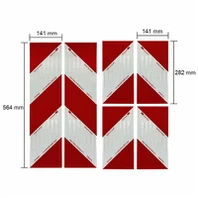
Red and white tape must be used for the back and bottom sides of the trailer. It must cover at least half of the total side length, the entire bottom of the back, and the entire lower rear bar.
Silver or white tape must be used for the upper rear of the trailer, in the shape of a 12-inch inverted “L” on each side.
Reflective tape requirements are outlined and enforced by the Federal Motor Carrier Safety Administration (FMSCA), which operates as a part of the Department of Transportation to “prevent commercial motor vehicle-related fatalities and injuries.”
Retro-Reflective Tape Prevents Truck Accidents
In fact, the red and white reflective tape has been proven successful in reducing the number of accidents that are caused by collisions with truck trailers. The purpose of the tape is to provide greater visibility to other drivers, allowing them to use the appropriate following distance or speed. Without reflective tape, most trailer bodies would be practically invisible in the night, leading to catastrophic results.
Consider the following statistics on retro-reflective tape:
Estimated to prevent 7,800 crashes every year
Saves up to 350 lives on a yearly basis
Prevents close to 5,000 traffic-related injuries
With proper visibility, drivers can avoid costly and devastating collisions with large trucks. Retro-reflective tape is truly making a major difference, saving hundreds of lives and preventing thousands of injuries every year!
Types of Collisions That Retro-Reflective Tape Can Prevent
A driver’s reaction time can be severely limited if they don’t see another vehicle until the last second. While other cars have headlights, are easier to spot, and can be avoided with quick maneuvering, trailers are often so difficult to see—without retro-reflective tape—that it may be impossible to avoid a collision if a driver unknowingly gets too close.
Some of the types of accidents that can occur due to lack of visibility:
T-bone collisions when a trailer is turning/backing up
Rear-end collisions in the same line
Side impact collisions due to lack of warning signs
Underride collisions (car slides into the underside of the trailer)