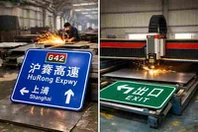
1. Lens embedded (traditional engineering grade) reflective film
Advantages: on the highway, drivers driving at night can find signs and reflective objects in front of their driving route earlier. Disadvantages: the applicable base plate of engineering grade reflective film is aluminum plate, and the construction and operation temperature is generally required to be above 18 ℃. If the temperature is too low, it will affect the adhesive performance and damage the service life of the sign.
2. Lens sealed (high strength) reflective film
Advantages: the high-strength reflective film manufactured by qualified technology and materials has at least twice the reflective coefficient of the engineering reflective film. Its internal vacuum support structure also solves the problem of condensation dew on the signboard due to temperature change, so as to further improve the reflective ability of the material.
Disadvantages: the structure of high-strength grade leads to some insurmountable product defects, such as brittle and easy tearing, wrinkling, bubbles, surface honeycomb protrusion, high production energy consumption, large emission, etc. The limitations of glass bead technology also hinder the improvement of high-strength grade to higher brightness and better angle.
3. Micro prism reflective film
Advantages: because the fluorescent reflective film can absorb the energy of invisible light in the spectrum and convert it, it can have better chromaticity and luminosity, that is, it is more bright. This fluorescent reflective film is much brighter than ordinary colors under bad weather conditions and when the sunlight is not so strong, and it is easier to attract people's attention.
Disadvantages: short service life