Essential Equipment and Materials for Manufacturing Traffic Signs
As a leading manufacturer in the traffic safety industry, Dingfei Reflective Material has been working with industry professionals for years, and we understand that many in the traffic safety sector may want to start producing their own traffic signs. However, they often don't know which equipment and materials are required. Today, we've put together a comprehensive guide on the essential materials and equipment for manufacturing traffic signs.

Materials for Manufacturing Traffic Signs
Traffic sign production primarily involves two types of materials: aluminum and reflective materials.
Aluminum Materials
Aluminum Sheets: Aluminum sheets typically come in a standard width of 1.22 meters. Common thicknesses range from 0.8mm to 3mm, and the price is calculated based on real-time market rates plus processing costs. Depending on the required sign specifications, you'll choose aluminum sheets with the appropriate thickness.
Slotted Rails: These are used to secure the traffic sign to the pole and ensure that the sign is firmly fixed in place.
Reflective Materials
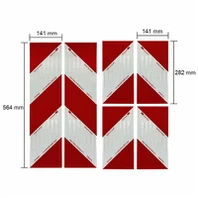
Reflective film is the main material used for traffic signs. While higher-quality reflective films are commonly used for durability and visibility, lower-end applications may use products like printed fabrics or specialized materials like "jingcai" fabric. When selecting reflective films, the grade of reflectivity must match the requirements of the traffic environment.

Equipment for Manufacturing Traffic Signs
Producing high-quality traffic signs requires specialized equipment. Below are the primary machines used in the process:
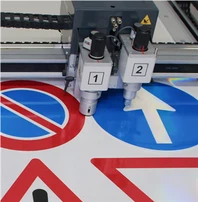
Cutting Machine: The aluminum sheets are typically 1.22 meters wide upon leaving the factory. A cutting machine is used to cut the sheets to the required size. Don't forget to account for the edge bending dimensions when cutting.
Corner Cutting Machine: Since most traffic signs require rounded corners, this machine is used to cut the aluminum sheets into the necessary round edges.
Bending Machine: After the corners are cut, the aluminum sheets need to be bent. The bending machine is used to create the edges, typically 1-3 cm depending on the size of the sign.
Riveting Machine: The riveting machine is used to attach the aluminum sheet to the slotted rail, ensuring the two components are securely fastened.
Circle Cutting Machine: This machine is used for making circular traffic signs. Some manufacturers combine the corner cutting and circle cutting functions into one device.

Additional Equipment for Enhanced Production Efficiency
Laminating Machine: A laminating machine can be used to apply reflective films onto the aluminum sheets more efficiently, speeding up the production process.
By utilizing the right combination of materials and equipment, you can ensure that your traffic signs meet industry standards while improving your production efficiency.