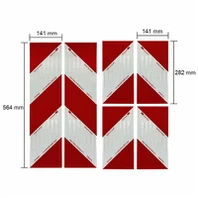
Traffic sign reflective sheeting is a material that is used to make road signs visible in the dark. It works by reflecting light from a vehicle's headlights back to the driver, making it easier for them to see and understand the information on the sign. This makes reflective sheeting an essential component of road safety.
There are two types of reflective sheeting: prismatic and glass bead. Prismatic sheeting is made from a material that reflects light at different angles, making it highly visible from all directions. This makes it the most commonly used type of reflective sheeting for road signs. Glass bead sheeting, on the other hand, uses thousands of tiny glass beads that are embedded in the material to reflect light back to the source. It is most commonly used in low-light conditions, such as on pedestrian crossings.

Reflective sheeting is available in different grades, depending on the level of reflectivity required. The highest grade is called Diamond Grade, which is used for signs that need to be highly visible, such as those on motorways. Lower grades, such as Engineer Grade and High-Intensity Prismatic, are used for less busy roads and pedestrian crossings.
The purpose of traffic sign reflective sheeting is to make road signs visible in all weather conditions and at all times of the day. This helps to reduce the risk of accidents caused by drivers not seeing or understanding road signs. Reflective sheeting is also beneficial for pedestrians, as it makes it easier for them to see crossing points and other important information.

In conclusion, traffic sign reflective sheeting is a crucial component of road safety. It enables road signs to be visible in all weather conditions and at all times of the day, reducing the risk of accidents caused by driver error. With different grades and types available, it is important to use the correct reflective sheeting for each location to ensure that road users are safe and informed.