High Intensity Prismatic (HIP) retroreflective sheeting is also referred to as ‘encapsulated lens’ sheeting. It consists of two layers: an outer translucent pigmented layer and an inner reflective layer with glass beads. The two layers are connected by a ‘lattice,’ which gives the sheeting its distinctive honeycomb appearance.
HIP sheeting is made up of prismatic cells. When a light beam lands on a sign with HIP sheeting, the light hits the sides of the prismatic cells and reflects back at a wider angle than it came. This means more light is reflected back towards the source of the light.
This type of sheeting is typically used for highway signs and when applied properly can last up to 12 years. Visibility of signs with HIP sheeting is from 800 to 1,200 feet away.
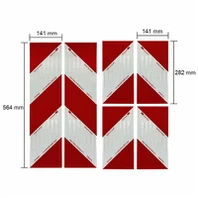
The type of reflective tape is made of PC material, which improves reflective brightness to enhance the visual effect. It’s usually applied to the vehicle body to have a safety warning effect in weak light conditions. Meanwhile, it can be applied to the garage and construction area to have guidance and a conspicuous purpose.
When compared directly with reflective sheeting that uses enclosed or encapsulated glass beads, High Intensity Prismatic reflective sheeting has the following advantages:
Improved legibility, due to better color contrast
Enhanced brightness by day and by night
Better visibility in all weather conditions
Greater return on investment, due to 12-year durability
Environmental benefits (further information can be found under the Environmental/Energy Advantage section)